
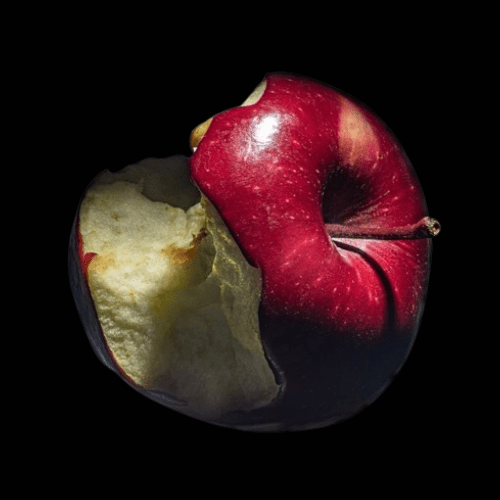
Satan is, let’s be honest, one of the most known entities in the West. Sometimes called Lucifer, sometimes Belial, or Beelzebuth to not cite his many names, the Devil sure is appears to be very mysterious. Is he that mysterious though?
- Satan – In the Bible
- Satan – In Judaism
- Satan – In Islam
- Satan – In Satanism and demonolatry
- Satan – As interviewed by me
Satan – In the Bible
I cannot be writing about Satan without mentioning the Bible, where he is seen more often referred to as a metaphor rather than an entity. This simple statement needs, in my eyes at least, some explanations on where it comes from. Just for your pleasure and pure curiosity, I have picked up some of my biblical notes from my early studies, as so to bring to you all the references of « satan » I could find in those texts. Perhaps, surely even, I have missed some and in that case, please note I haven’t read the Bible since I was a teenager. The second thing you shall keep in mind is that some explanations will explain the verses purposes, the way I was taught them by the community I was raised in, as well as my own point of view. You may jump directly to the summary at the end if you are lazy to read every verses and mentions of the word satan I could find. Let’s be honest, its a long blog post. At the same time, I hope it will allow you to have some background knowledge on this topic.
Old Testament
- Job chapters 1 and 2 : Satan appears before God alongside the « sons of God. » During these divine assemblies, God highlights Job’s faithfulness and integrity. Satan challenges God’s assessment, suggesting that Job’s piety is due to the blessings and protection he receives. To test this claim, God allows Satan to strip Job of his wealth, family, and health, but prohibits taking Job’s life. Satan enacts this permission, first by destroying Job’s possessions and family, and later by afflicting him with painful boils, all to test whether Job will curse God in response to his suffering.
In the Book of Job, Satan appears to be working alongside the Abrahamic God. He appears as an adversary, a challenger and as an accuser. In the context of Job, Satan’s actions are instrumental in setting the stage for a an exploration of faith, suffering, and divine justice, challenging not only Job but also you as a reader to consider the reasons and depth of one’s faith. I always have viewed this « satan » not as the demonic entity but more a regular member of the council of God that is titled « satan ».
- 1 Chronicles 21:1 : « And Satan stood up against Israel, and provoked David to number Israel. »
This, without context, can seem a little obscure. What is happening in this part is that King David, ruling over a united Israel, decides to take a census of the Israelite people. This act is traditionally understood as a demonstration of pride or a lack of trust in God’s provision and protection. In other words, in the biblical narrative, conducting a census is often interpreted as reflecting a lack of reliance on God’s support, which leads to adverse outcomes. Why is that? This isn’t a biblical class study my friends, but basically, it meant a reliance on human resources. Yes, that’s not good apparently, very bad in fact. How could I know why though? I am not an expert in the Bible, just another reader among the billions that read it before, now and after me. Back to Satan, he is again seen as a challenging force that tests humans in their faith towards God.
- Zechariah 3:1-2 : « And he showed me Joshua the high priest standing before the angel of the Lord, and Satan standing at his right hand to accuse him. And the Lord said unto Satan, The Lord rebuke thee, O Satan; the Lord that hath chosen Jerusalem rebuke thee: is not this a brand plucked out of the fire? »
In Zechariah 3:1-2, the context revolves around a vision given to the prophet Zechariah during the period when the Israelites were rebuilding Jerusalem and the Temple after their return from Babylonian exile. This literal translation reflects the scene of a celestial courtroom, where Satan stands as an adversary against Joshua, the high priest. Satan’s role is that of an accuser, in a legal or judicial sense. You might be wondering now « why is God rebuking Satan, what is this « brand plucked out of the fire »? ». One word: redemption. This scene shows that Satan exposes Joshua’s sins and God redeems him from those marking life events (that is here the expression « brand plucked out of the fire »).
New Testament
- Matthew 4:1-11 : After Jesus fasts for 40 days and nights in the wilderness, Satan approaches Him and presents three temptations. First, he challenges Jesus to turn stones into bread. Next, he takes Jesus to the pinnacle of the temple in Jerusalem and urges Him to throw Himself down, citing that angels will protect Him. Lastly, Satan takes Jesus to a high mountain, showing Him all the kingdoms of the world and their splendor, offering them in exchange for Jesus’ worship.
- Matthew 12:22-32 :Jesus heals a demon-possessed man who was blind and mute, leading to questions about His authority. The Pharisees accuse Jesus of casting out demons by the power of Beelzebul. Jesus responds with something along the lines of: « it wouldn’t make any sense for me to banish a demon with the help of a demon ».
- Matthew 16:23 : After Peter declares Jesus as the Christ, Jesus begins to explain how He must go to Jerusalem, suffer, be killed, and on the third day be raised. Peter rebukes Jesus, saying that this must not happen. Jesus then turns and says to Peter, « Get behind me, Satan! You are a stumbling block to me; you do not have in mind the concerns of God, but merely human concerns. »
A mouthful of verses. Still with me? I know you are tired and your brain is burning, but allow me to remind you you inflicted that upon yourself (joke, please don’t sue me for diffamation). In Matthew 4:1-11, I always interpreted it as Satan trying to test if Jesus would respect his faith towards the Abrahamic God. I explain this as Jesus purposefully enduring those 40 days trial to test his own resilience. In my eyes, Satan’s presence was no coincidence, but you may interpret this however you want. I chose to add Matthew 12:22-32 due to the notable presence of another biblical name of Satan: Beelzebul/Beelzebub/Beelzebuth. The two names are compared by Jesus himself in his famous come back: « If Satan drives out Satan, he is divided against himself. How then can his kingdom stand? ». Something new appears Matthew 16:23 : in the incident with Peter, Satan is metaphorically associated with any influence that seeks to divert from God’s plan. Satan, the title, appears for the first time in the New Testament.
- Mark 4:15 : In the Parable of the Sower, Jesus describes how some seeds fall on a path where the soil isn’t deep. Here, the seeds represent the message of God’s kingdom. When these seeds land on the path, they symbolize people who hear God’s message but don’t truly understand or take it to heart. Almost immediately, Satan acts like a bird swooping in to snatch away these seeds.
I purposefully decided to not repeat the same verses in Mark than in Matthew for the sake of your (and my) sanity. My interpretation of the assigned role of Satan in this parable is of Satan quickly taking away the message from human’s minds, pushing us to exerce a critical thinking of religious teachings.
- Luke 13:16 : « And ought not this woman, a daughter of Abraham, whom Satan has bound for eighteen long years, be set free on the Sabbath day from what bound her? »
- Luke 22:3-6 : « Then Satan entered Judas, called Iscariot, one of the Twelve. »
Again, for the sake of everybody’s sanity, I didn’t repeat what was disclosed already in Matthew and Mark’s gospels. Satan’s role in the Gospel of Luke is multifaceted: his influence in physical afflictions and his involvement in the betrayal by Judas showcase his broader adversarial actions. From a satanic POV, associating Satan to illnesses should be seen not as much as the entity cursing this woman, but more an adverse life event being titled as « satan ». Satan entering Judas’ actions is also to me nothing but a metaphor. Further disclosed in John 13:27, Judas actions are confirmed to be from a greater plan:
- John 13:27 : « As soon as Judas took the bread, Satan entered into him. So Jesus told him, ‘What you are about to do, do quickly.’ »
Epistles
- 2 Corinthians 11:14-15 : Paul warns about false apostles who disguise themselves as apostles of Christ. He notes that this should not be surprising, as even Satan disguises himself as an angel of light.
- 1 Peter 5:8-9 : « Be alert and of sober mind. Your enemy the devil prowls around like a roaring lion looking for someone to devour. »
- 1 Thessalonians 2:18 : « For we wanted to come to you—certainly I, Paul, did, again and again—but Satan blocked our way. »
In the entire Epistles, that are a direct reflection of the New Testament theology, there is an emphasis on Satan as a real and active spiritual adversary. He is described as intentionally opposing God’s work, deceiving believers, and seeking to undermine the spread of the christian gospel. The depiction of Satan in the Epistles aligns with this more developed concept of a spiritual battle between good and evil, with Satan as a key antagonist.
Apocalypse
- Revelation, Seven Letters : « throne of Satan » (Revelation 2:13); « synagogue of Satan » (Revelation 2:9)
- Revelation 12:9 : « The great dragon was hurled down—that ancient serpent called the devil, or Satan, who leads the whole world astray. He was hurled to the earth, and his angels with him. »
- Revelation 13:2 : »The beast I saw resembled a leopard, but had feet like those of a bear and a mouth like that of a lion. The dragon gave the beast his power and his throne and great authority. »
In the Book of Revelation, Satan is depicted with a lot of metaphorical imageries. The Book of Revelation starts with seven letters from Jesus to seven churches in Asia Minor, each tailored to address the unique situations and challenges those communities were facing. Each letter delivers both praise and criticism, along with promises for those who successfully navigate their trials. For instance, the letter to Pergamum refers to the « throne of Satan », linking to the city’s pagan customs or its notable altar to Zeus. The letter to Smyrna mentions the « synagogue of Satan » which represents opposition from certain Jewish groups, perceived as antagonists, or so to speak, « satans ». The use of the terms « dragon » and « ancient serpent » for Satan in Revelation 12:9 not only links him to the serpent in the Garden of Eden (what is a dragon without wings or legs?) but also employs a mythological imagery to represent his menacing nature and his role as the « deceiver » and « destroyer ».
Conclusion
Are you still alive and breathing? This was a deep dive in the biblical texts. If you skipped everything just to read this conclusion, let me feed you with the nutshell version: In the Old Testament, the term « Satan » functions primarily as a title or metaphor, representing an adversary or accuser within a heavenly or earthly context, without strong personal attributes. Moving into the New Testament and the Epistles, the depiction shifts towards that of a more distinct and personalized entity—an actual being with intentions and actions that directly oppose God and influence human affairs. By the time of the Book of Revelation, while still presented as a literal figure, Satan also embodies the ultimate metaphorical representation of adversarial energy, capturing the cosmic battles depicted in these apocalyptic visions.
Interlude
The good news, my dear readers, is that we are done with the biblical vision. Bad news for your attention span? We will look a bit into Jewish and Islamic lore. Will it be as long as the biblical texts one? Absolutely not. By no mean am I trying to reduce the vision of Satan in Judaism and Islam by not speaking as much about it.I simply do not possess the knowledge necessary for a deep dive into Jewish and Islamic sacred scriptures studies, nor will I have the cultural aspect necessary to convey everything to the fullest. I tried, however, to convey what I have been taught by members of those community themselves.
Satan – In Judaism
Historically, the term « Satan » is used sparsely and mostly not as a proper name but rather as a noun with the general meaning of « adversary » or « obstacle. » For instance, in the Book of Numbers (22:22), an angel of God is described as a « satan » (adversary) when he stands in the path to oppose Balaam as he travels. In Judaism, the Old Testament, or Tanakh, presents Satan not as a being but as an adversary or accuser whose role is sanctioned by God to test human righteousness. This is evident from texts like those in Job and Zechariah, where Satan acts more as a divine prosecutor within God’s court, challenging individuals to demonstrate their faithfulness and integrity. These references underline a fundamental aspect of the Jewish understanding of Satan: he is an integral part of the divine plan, serving as an instrument for testing and thus promoting spiritual growth and ethical conduct. According to The Book of Fallen by M. Mc Gregor, « another popular translation of Satan in Hebrew is « hinderer » ».
I won’t go in much details about the vision of Satan and demons in Kabbalah. What I will write is what I have been taught by a training Rabbi I know. In Kabbalistic thought, these obstacles or challenges (represented metaphorically by Satan) are necessary for spiritual growth, providing individuals with the opportunity to choose righteousness and thus elevate themselves and the world, bringing it closer to a state of perfection or Tikkun Olam (repairing the world).
Satan – In Islam
In Islam, Satan (known as Iblis or Shaytan) is a pivotal figure who represents the embodiment of evil and temptation, yet his presence is abstract and pervasive, influencing humans through whisperings and incitements to stray from the path of righteousness. In Surah 7:11-18, Iblis challenges Allah, vowing to lead humans astray as retribution for being cast down. Unlike in Christian and Jewish traditions where Satan’s role can sometimes be perceived as a test or an accuser, in Islam, Iblis is clearly an enemy to humanity, actively working to misguide and corrupt them. Iblis’s method of influence in Islam is notably abstract yet seems to be omnipresent. He does not force evil but whispers suggestions (waswasa) into the hearts of humans, coaxing them to make choices that lead away from Allah’s commands. This aspect is illustrated in the Quran, such as in Surah 114:4-6, which seeks protection from the « evil of the whisperer (devil) who withdraws (after his whisper), » underscoring his subtle and pervasive nature. Where Iblis is a distinct being, Shaytan is a more general term that can refer to any demonic or evil entity that seeks to mislead humans, sometimes even humans themselves can be told they are shaytans. It is used in the Quran and Hadith to describe any rebellious or malevolent creature from among the jinn or humans who acts in defiance of Allah.
Satan – In Satanism and demonolatry
Satanists and demonolators have a a broader view of Satan. I am talking here from a theistic point of view as this is a blog created by none other than a religious satanist.
In Satanism, Satan transcends mere symbolism to become a revered deity associated with wisdom, esoteric knowledge, and spiritual liberation. Others view him as the primal force of the universe, representing creative chaos and the source of spiritual transformation, often linked with occult and magical practices. Satan symbolizes the inherent duality of nature, highlighting the need for balance between opposing forces. Politically and socially, he can serve as a symbol of resistance against oppressive institutions, emphasizing liberation and social change. Psychologically, Satan may represent the individual’s inner shadow, containing repressed or denied aspects of the psyche, where engaging with this shadow can lead to personal integration and growth.
More often than not, Satan is for some of us the « All », the encompassing of every element and stream of energy. He is Consciousness with a big C, he is the Source, the very starting point of « all that is ». He is a sentient being, not just a title, that helps oneself with a lot of things along their path. Whether you are a religious, spiritual, a diabolist or just under the big umbrella of theistic satanism, Satan is often seen as a father figure, a guide, a mentor, a teacher or even a lover or friend. This multifaceted perception allows individuals to draw from his attributes according to their personal needs and desires, finding in him inspiration, strength, and wisdom.
His role transcends the mere antagonist as portrayed in the religious texts we have seen above; instead, he embodies empowerment and enlightenment. He encourages questioning norms, pushing the boundaries of accepted morality and knowledge, fostering a deep, personal journey of understanding and self-discovery. This journey with Satan at one’s side is deeply liberating. Through him and by his side, the satanist or demonolator will perhaps choose to follow the road of apotheosis, often called in this community as deification – which would need in itself a whole other blog post.
Satan – As interviewed by me
Satan is the pillar of my practice, my faith and my life. My life, the way I live it, is meant to honour him. I do not say this as so you feel compelled to do the same, more so you feel inspired perhaps to find your very own dynamic with him. Writing this interview was fun, extremely fun, as I am so often by his side and haven’t really interviewed him since I began this path. My interviews are done by the means of divination, meditation and channeling.
How do you view yourself?
« I like to view myself as multifaceted. I can be everything and anything, bending myself to the versions of me that is most needed by humanity. I am rage, I am softness, I am urges and self control, I am patient, I am impulsive. My Will is infinite, I know no limitations. I am a shapeshifter, knowledge bearer, storm bringer, fate weaver. I have many names, many titles. From father of lies to father of All, I will always wear on my back the poisoned arrows that are shot my way or the way of my believers. I simply am. I will always be. »
What can you help us, as humans, with?
« There’s no limits to what I can help you with, but sometimes I will send one of my dear friends to assist you with a specific topic. The areas most often associated with me are protection and baneful, mastery of the self and wisdom. I am also a confident, wearing the hat of any figure you need in your life at a set moment. My worshipers and believers love to say I feel comforting and I will admit I love the sound of that. »
What advice do you have for us?
« I can understand where this question comes from despite how broad it is. Right now, I believe humanity needs to learn how and when to retreat and when to stand in their power. Brutal force leads to nothing but breakage and exhaustion. »
What are offerings you love ?
« Anything that comes from the heart, except for sacrifices of living beings. I must say, I enjoy roses and quality time the most. »
Any last words?
« Do not fear falling in the Abyss, for it is where you will find the rarest treasures. Doubt yourself, doubt me even if you must. You shall never settle in anything other than the knowledge everything is always changing. You age as flowers bloom, you learn as you fall to the ground. All there will ever be is the immutability of transformation. Rely on your capacity to shed your skin while you grow. »
TASA REME LARIS SATAN
Ave satanas
- Article

 The Devil's Apple